Work Systems
How to Run Deep Work Across Time Zones Without Burning Out
Deep work on the road depends less on discipline than on calendar architecture, light timing, and how quickly you adapt to the destination clock.

A practical guide to protecting deep-work capacity across time zones by tightening meeting load, destination wake time, and travel-week operating rules.
At a glance
- Protect two work windows: one for high-cognition output and one for timezone overlap.
- When time-zone change is large, local sleep and light timing matter more than extra effort.
- Travel weeks need smaller workloads, not motivational speeches about resilience.
Overview
Deep work usually breaks on the road for structural reasons, not moral ones. Wake time drifts, meetings expand, light exposure changes, and logistics start competing with the work that actually matters.
Why deep work fails first when you travel
Travel changes the inputs that make concentration possible: sleep timing, daylight, speech noise, calendar overlap, and the number of decisions you need to make before noon.
Rule
- Treat deep work as a protected operating window, not as the leftover time after messages, meetings, and transit.
Anchor the day to the destination
If you land in a place that is more than 3 hours away from your normal time zone, shift to local sleep and waking routines immediately. CDC guidance on jet lag is direct: use the destination schedule, spend time in well-lit areas during the day, and use caffeine and exercise strategically rather than randomly.
Trying to work on home time while sleeping on destination time creates a split clock. That split clock usually shows up as reactive mornings, weak attention, and late-day overcompensation.
- Design two work windows
- 1) Primary block
Place the hardest cognitive work inside the first high-energy block after waking, daylight exposure, and a short movement session.
2) Overlap block
Use the second block for meetings, approvals, and decisions that require timezone overlap with colleagues or clients.
Deep Work Capacity = Sleep Quality x Time-Zone Alignment x Calendar Protection x Environment Quality
Meeting perimeter
Set a maximum number of synchronous hours before you land. On weeks with long-haul movement, late arrivals, or lodging changes, reduce meetings again rather than pretending travel is invisible.
Warning
- A travel day plus a full meeting day is usually two separate workloads hiding inside one calendar.
Protect the inputs before the block
Keep the phone out of reach, publish response windows, and choose work environments where speech is predictable rather than interesting.
CDC sleep guidance still matters on the road: adults generally need 7 or more hours, and the operational goal is consistency rather than occasional recovery sleep.
Regular movement is not a side quest. Federal activity guidance treats aerobic and strength work as baseline health maintenance, and on travel weeks it also helps restore alertness and body-clock stability.
Travel week protocol
1) Arrival day = orientation, admin, daylight, and no heroic output target
2) First full day = one real block plus one collaboration window
3) Second full day = resume normal production only if sleep has stabilized
- Environment rules that travel well
- Face a wall or quiet edge
- Keep the phone off the desk
- Use instrumental audio or no audio
- Pre-commit the block length before opening messages
- Carry one physical cue for work mode
"Deep work survives travel when the schedule gets opinionated before the environment gets chaotic."
Recovery is part of output
If a week contains red-eye travel, late arrivals, or social catch-up, shorten the block instead of pretending you still have home-base capacity.
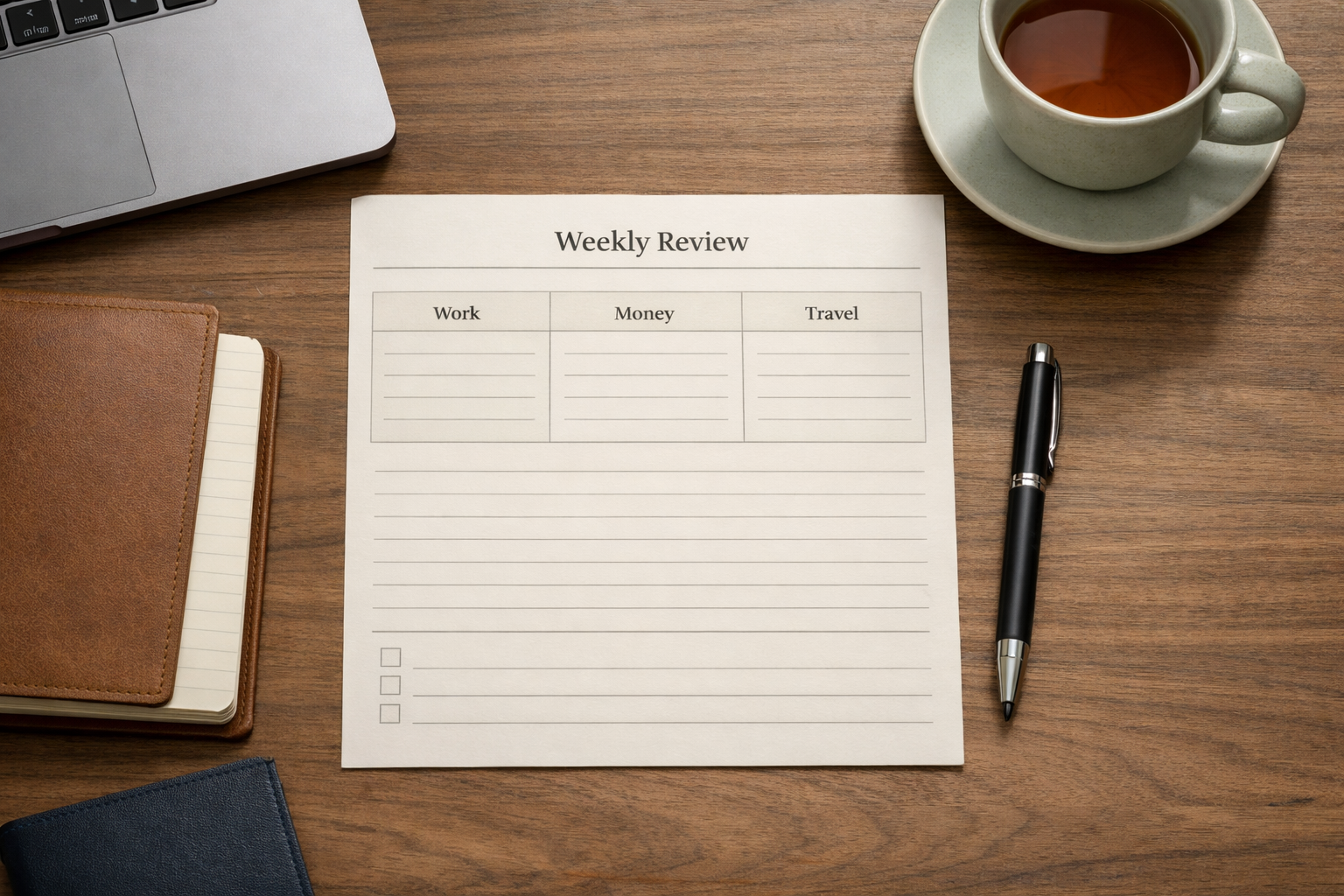
Use weekly review to reset the system
Check four signals every week: wake-time drift, number of uninterrupted blocks completed, meeting-heavy days, and sleep quality. If two of the four are getting worse, reduce demands before you add another productivity tactic.
Signal
- Strong work systems get simpler during disruption, not more elaborate.
- The 90-minute setup before a travel week
- Publish local working hours
- Book daylight or walking time
- Create one no-meeting block on the calendar
- Choose tomorrow's workspace before dinner
- Move low-value calls into one overlap window
- What good looks like after two weeks
The goal is not perfect discipline. The goal is predictable output: more uninterrupted blocks, fewer reactive mornings, and less need to rescue the week with late-night work.